
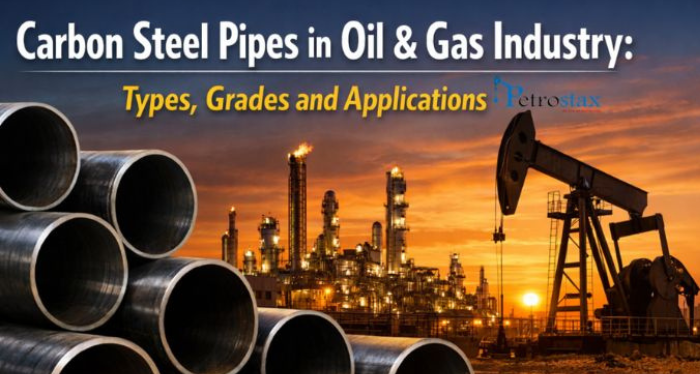
Oil and gas travel thousands of kilometers before reaching refineries, industries and homes. The entire system depends on pipelines that can handle pressure, heat and heavy usage for many years without failure.
Carbon steel remains a trusted choice among many materials used in pipeline construction. Engineers and pipeline designers rely on carbon steel pipes for oil and gas because the material provides durability, pressure resistance and long service life in demanding industrial environments.
Carbon steel pipes form the backbone of oil and gas infrastructure from drilling sites to refineries and transportation networks. Understanding the types of pipes, the ASTM grades used in projects and their real applications helps engineers and procurement teams make better decisions when planning pipeline systems.
In many projects, companies also work closely with experienced oil and gas equipment suppliers in UAE to source reliable pipeline materials and industrial components.
Why Carbon Steel Pipes Are Important
Pipelines must carry crude oil, natural gas and chemical fluids across deserts, offshore platforms and processing plants. These pipelines are exposed to pressure changes, temperature variation, vibration and corrosive substances.
Carbon steel performs well in such environments because of its mechanical strength and structural reliability. The material can also handle large pressure loads and maintain stability over long periods of operation.
Another reason companies choose carbon steel is its availability and compatibility with industry standards. Manufacturers produce pipes according to globally accepted specifications which allows engineers to select materials that match project requirements.
Because of these advantages, carbon steel pipes are widely used in upstream drilling operations, midstream transportation networks and downstream refinery systems.
Types of Carbon Steel Pipes
Different pipeline systems require different pipe designs. The selection usually depends on operating pressure, pipe diameter and production method.
1. Seamless Carbon Steel Pipes
Seamless pipes are produced from solid steel billets that are heated and shaped into cylindrical tubes without welding. The structure remains uniform throughout because there is no welded joint in the pipe body.
This manufacturing method gives seamless pipes higher pressure tolerance. They are commonly used in high pressure pipelines, drilling operations and refinery systems where safety is crucial.
2. Welded Carbon Steel Pipes
Welded pipes are manufactured by rolling steel plates or coils into a cylindrical shape and welding the edges together.
These pipes are widely used in long distance pipelines and industrial structures because they can be produced in larger diameters. It is also suitable for transporting crude oil, natural gas and water used in drilling operations.
3. ERW Carbon Steel Pipes
Electric Resistance Welded (ERW) pipes are made by heating steel edges with electrical current before welding them together. The process gives accurate dimensions and smooth internal surfaces.
ERW pipes are commonly used in refinery piping networks, fluid transportation systems and infrastructure projects related to the oil and gas sector.
Understanding carbon steel pipe grades ASTM
Pipelines in oil and gas operations must meet strict safety and performance standards. One of the most widely used standards is ASTM, which defines the mechanical properties and chemical composition of steel pipes.
The term carbon steel pipe grades ASTM refers to specific material classifications that ensure pipes meet industry requirements.
Some widely used grades include:
1. ASTM A106
These pipes are designed for high temperature service. They are frequently used in refinery piping systems and industrial plants where fluids move at elevated temperatures.
2. ASTM A53
These are used for structural and pressure applications. It is also suitable for transporting oil, gas and water across industrial pipeline networks.
3. ASTM A333
ASTM A333 pipes are used in low temperature environments such as gas processing plants and cold climate pipelines.
Selecting the right ASTM grade is important because it directly affects pipeline safety, durability and operational efficiency.
Applications of Carbon Steel Pipes
Carbon steel pipes are used across the entire oil and gas value chain. Each stage of production requires reliable piping systems. To support these large-scale operations, industries also depend on trusted carbon steel pipe suppliers UAE who provide pipes that meet international standards and project requirements.
1. Upstream Exploration and Drilling
During drilling operations, pipes are used for well casing, tubing systems and fluid transportation. These pipes must handle high pressure drilling fluids and crude oil extraction.
Durable pipe materials help maintain safe and continuous drilling operations.
2. Midstream Transportation
Once crude oil or natural gas is extracted it must travel through long pipeline networks to reach refineries and storage terminals.
Carbon steel pipelines are widely used in these transportation systems because they provide stability and pressure tolerance over long distances.
3. Downstream Refining and Processing
Refineries use extensive piping networks to move crude oil and processed fuels between units. These pipes connect distillation columns, heaters, reactors and storage tanks.
The Role of Valves in Pipeline Systems
Pipes move the fluid but valves control the system in oil and gas pipelines. Without valves it would be impossible to regulate flow, manage pressure or safely stop operations when maintenance is needed. This is why selecting the right industrial valves for oil and gas projects is important for maintaining safe and efficient pipeline operations.
Main functions of valves in pipeline systems are:
1. Flow control
Valves regulate how much fluid moves through the pipeline. This helps maintain stable operation in processing plants and transportation pipelines.
2. Isolation during maintenance
Valves allow operators to shut off that section without stopping the entire system when a section of pipeline needs inspection or repair.
3. Pressure regulation
Some valves help maintain safe pressure levels inside pipelines and prevent pressure damage.
4. Backflow prevention
Check valves stop fluid from flowing in the wrong direction which protects pumps and compressors.
Common valves used in oil and gas pipelines:
Engineers must carefully evaluate valve type, pressure rating and material before installation because valves directly affect safety and efficiency. This makes choosing industrial valves for oil and gas projects an important step in pipeline system design.
In addition, maintenance processes such as valve surface polishing help improve sealing performance and extend the lifespan of valves used in pipeline systems.
Conclusion
Carbon steel pipes are widely used in the oil and gas industry because they are durable and can handle high pressure and temperature. They are used in drilling, transportation pipelines and refinery systems to move oil and gas safely.
Understanding pipe types and carbon steel pipe grades ASTM helps engineers choose the right pipes for different applications. In addition, working with trusted oil and gas equipment suppliers, experienced pump suppliers in Dubai for oil and gas and established oil and gas industry products suppliers in UAE helps ensure that projects receive quality materials needed for safe and efficient operations.
FAQ
1. Why are carbon steel pipes used in oil and gas pipelines?
They handle high pressure, last long and are reliable for transporting oil, gas and industrial fluids.
2. What are the common ASTM grades used for carbon steel pipes?
ASTM A106, ASTM A53 and ASTM A333 are widely used for different pressure and temperature conditions.
3. What is the difference between seamless and welded carbon steel pipes?
Seamless pipes have no welded joint and suit high pressure use. Welded pipes are made from rolled steel plates and are used in large pipelines.
4. Why are valves crucial in pipeline systems?
Valves control fluid flow, manage pressure and allow sections of pipelines to be shut during maintenance.
5. How do equipment suppliers support oil and gas projects?
They supply pipes, valves, pumps and fittings that meet industry standards and support large project requirements.